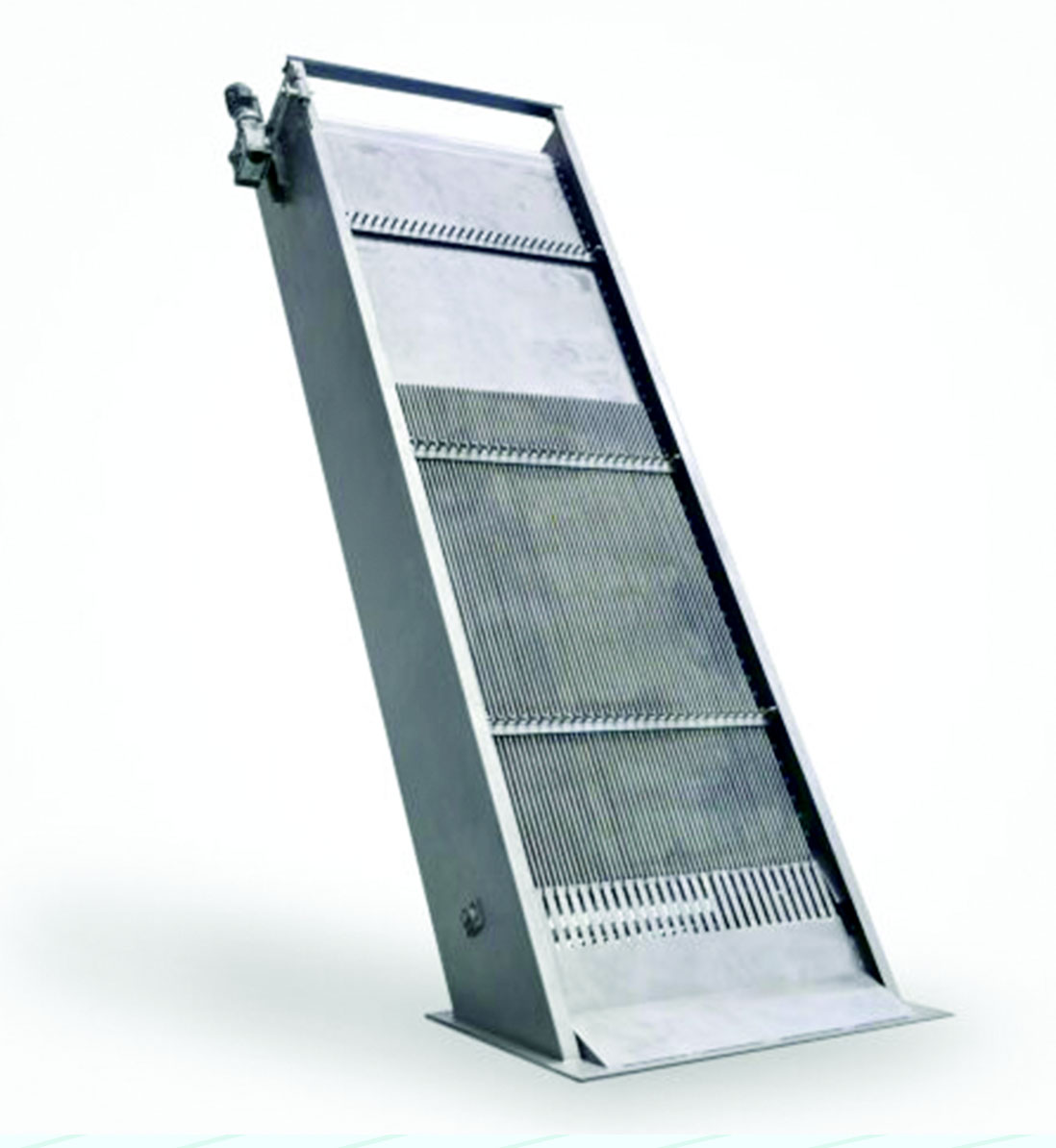
 Coarse screens, located at the very inlet point (inlet structure) of wastewater treatment plants, are the first mechanical protection equipment used to retain and separate large-sized solid wastes (tree branches, stones, plastic bottles, rags, bags, etc.) in the incoming raw wastewater.
If these large and coarse materials in the water coming from the wastewater collection lines to the facility are not retained in the first stage, they get stuck in the impellers of the wastewater pumps in the facility, causing motors to burn out, pipelines to clog, and sensitive treatment units to be mechanically damaged.
In this respect, coarse screens are the first and most critical line of defense that protects the operational life and safety of the entire facility.
Our coarse screens are generally designed to have a bar spacing of 20 mm to 50 mm and more.
Depending on the flow rate and channel depth of the facility, they are produced as Manually Cleaned Coarse Screens or Automatically Cleaned Coarse Screens (Catenary type, Cable type, or Chain type) operating with a mechanical rake mechanism.
In our automatic systems, thanks to the sensors (ultrasonic level sensors) that measure the water level difference in front of and behind the screen, the mechanical rake is automatically activated as the screen gets clogged, scraping the retained solid wastes upwards and transferring them to a waste container or conveyor.
Our coarse screens, entirely made of hot-dip galvanized or stainless steel, offer uninterrupted pre-treatment performance without bending or breaking even under the heaviest loads. .